
Belmont
A primary suite addition and first-floor reconfiguration reshape a historic farmhouse for clearer, more connected family living.



Belmont
Addition + Renovation
Charlottesville Farmhouse Renovation for Modern Family Life
Located in Charlottesville’s Belmont neighborhood, this 1925 farmhouse began with a familiar, traditional layout: kitchen, living, and dining on the first floor, with bedrooms above. While functional, the arrangement no longer supported the needs of a growing family or the way they moved through daily life. The project combines a new primary suite addition with a complete reworking of the first floor. These moves exist to improve flow, strengthen connections between spaces, and give everyday functions more deliberate placement. In daily use, the house shifts from compartmentalized to continuous, allowing cooking, gathering, and movement to happen with less friction.
A Kitchen That Reconnects the Home
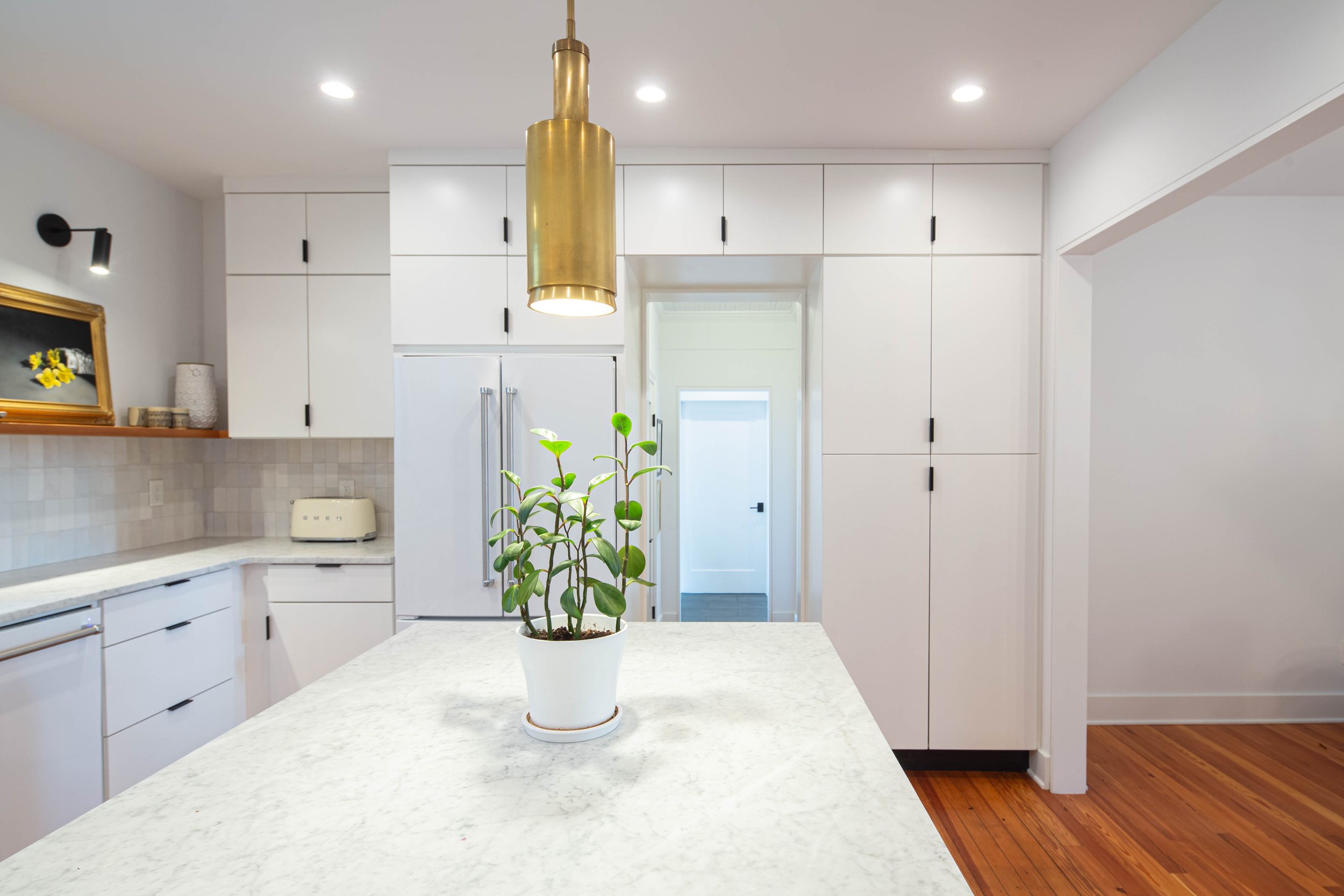
The kitchen is reimagined as the central organizing space, positioned to better connect living and dining areas. This element exists to bring together activities that were previously separated, allowing the kitchen to operate as the functional and social core of the home. Crisp white cabinetry, a misty quartzite island, and heart pine shelving establish a balanced material palette. The island serves as both a primary prep surface and a gathering point for casual meals and homework, supporting multiple uses without requiring the room to shift identity.
A Cabinetry Passage That Defines Transition
A custom cabinetry passage connects the main house to the new primary suite. This element exists to create a controlled transition between public and private zones while maintaining visual continuity. The passage compresses slightly before opening into the addition, using moments of tightening and release to guide movement. In daily use, it provides separation without disconnection, allowing the suite to feel private but still integrated into the overall plan.
A Primary Suite Addition With Secondary Entry
The addition houses the primary suite and introduces a secondary mudroom entry. This move exists to expand the home’s capacity while improving how the family enters and moves through the house. The mudroom absorbs the practical needs of daily life, while the suite provides a quieter, more private retreat. Together, they allow the main living spaces to remain more focused and less burdened by competing functions.
A Dining Room Reclaimed From the Original Kitchen
The former kitchen is repurposed as a dining room, positioned adjacent to the new kitchen. This element exists to take advantage of existing space while improving light and connection between rooms. Three large casement windows bring consistent daylight into the space, reinforcing its role as a place for gathering. In daily use, the proximity to the kitchen supports both everyday meals and larger occasions without disruption.
Material Contrast That Bridges Old and New
Throughout the renovation, modern finishes are introduced alongside the home’s original character. This approach exists to create contrast without erasing history. Clean cabinetry lines, refined surfaces, and controlled detailing sit against the backdrop of the existing structure. In daily use, this balance allows the home to feel both updated and familiar.
A Primary Bathroom Designed for Light and Texture
The primary bathroom is organized as a quieter, more contained space within the suite. Textured shower walls are used to scatter natural light, creating depth and variation across the surfaces. This element exists to soften the room and introduce a more tactile experience. In daily use, it becomes a place of retreat, defined by calm light and material rather than overt gesture.
A Clearer Way of Living
Belmont is a story of renewed function: a historic farmhouse reshaped through strategic space planning, material continuity, and carefully controlled transitions. The result is a home that supports the rhythms of family life with greater clarity, connection, and ease.