
Herndon
A classic 1940s Charlottesville cottage is recast as a site-inspired modern residence.







Herndon
Addition + Renovation
Charlottesville Cottage Renovation Shaped by Connection and Light
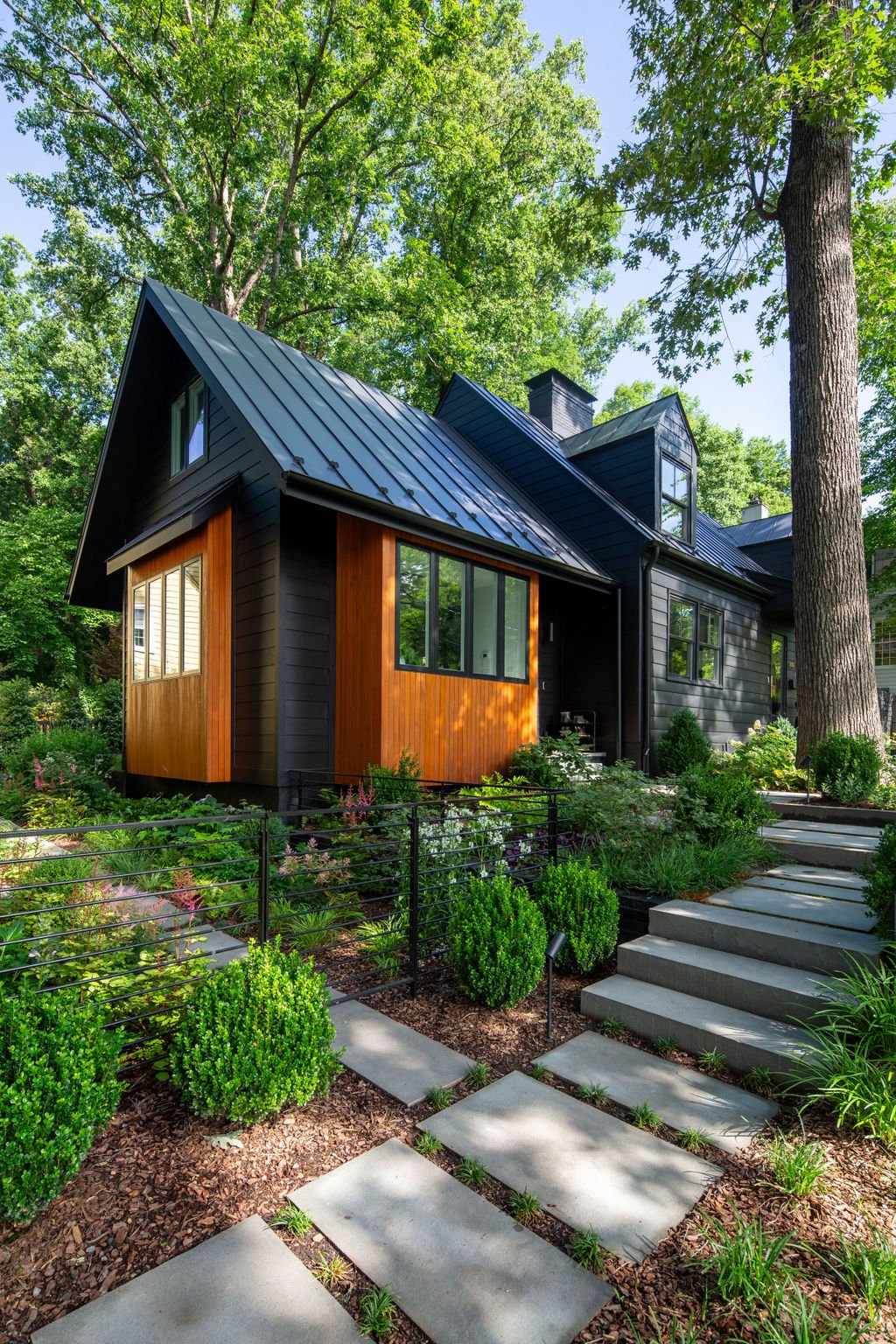
Sheltered under tall oaks in Charlottesville’s Rugby Hills neighborhood, Herndon began as a classic 1940s Cape Cod with a cellular plan that limited light, movement, and connection. The house had charm and presence, but its interior organization worked against the way its owners lived, particularly their preference for dinner parties, backyard gatherings, and an open, social rhythm. The project rethinks the home through a targeted addition and interior reconfiguration. The design draws from one existing condition that worked: a small side porch that allowed casual exchange with passing neighbors. That moment of connection became the guiding idea, shaping how the new kitchen engages both the street and the interior of the home.
A Kitchen Addition That Replaces the Porch
The former side porch is replaced with a new kitchen designed to handle a full range of use: daily meals, homework, informal work, and larger gatherings. This element exists to relocate the center of activity to a space that can support both function and connection. The kitchen is intentionally set 18 inches below the main floor, taking advantage of the site’s gentle slope. This move creates a subtle but perceptible threshold between old and new, echoing the spatial compression and release of a conversation pit. In daily use, the shift in level grounds the kitchen, strengthens its relationship to the street, and makes arrival into the space more experiential.
Fenestration That Maintains Street Dialogue
Countertop-to-ceiling casement windows line the kitchen, directly referencing the openness of the original porch. These openings exist to maintain a visual and social connection between the interior and the pedestrian street. When open, they allow conversation to pass easily between inside and out. When closed, they still frame movement, light, and neighborhood activity. This keeps the kitchen engaged with its surroundings rather than turning inward.
Cantilevered Storage That Preserves Space
Cabinetry and appliances are held within cantilevers wrapped in oiled cypress rainscreen. This strategy exists to push functional mass to the perimeter while minimizing the footprint of the foundation. In use, this keeps the central floor area open for gathering and movement. The kitchen feels more generous than its size suggests, allowing multiple people to occupy the space comfortably without congestion.
A Structural Column That Becomes an Architectural Marker
An existing structural deficiency required the introduction of an exposed column. Rather than conceal it, the column is expressed in hot rolled steel and walnut. This element exists to resolve a structural need while marking a key moment in the house. It defines the entry to the second floor and gives the transition a clear physical and visual presence. In daily use, it becomes a quiet point of orientation within the home.
Opening the Plan for Light and Movement
Interior walls were selectively removed to improve visual and physical connections between rooms. This intervention exists to allow natural light to move deeper into the house and to reduce friction in daily circulation. The result is a brighter, more continuous interior where movement between spaces feels intuitive. Walls are not removed indiscriminately; they are edited to support both openness and spatial definition.
Material Language That Signals Transition
The interior palette uses bleached oak floors, a soft gray wall wash, and walnut accents. These materials exist to create a calm, cohesive base while marking moments of compression and transition. Walnut appears at key points where spaces tighten or shift, giving subtle cues about movement through the house. In daily use, this helps orient the occupant without relying on overt gestures.
Bathrooms Reconfigured for Function and Texture
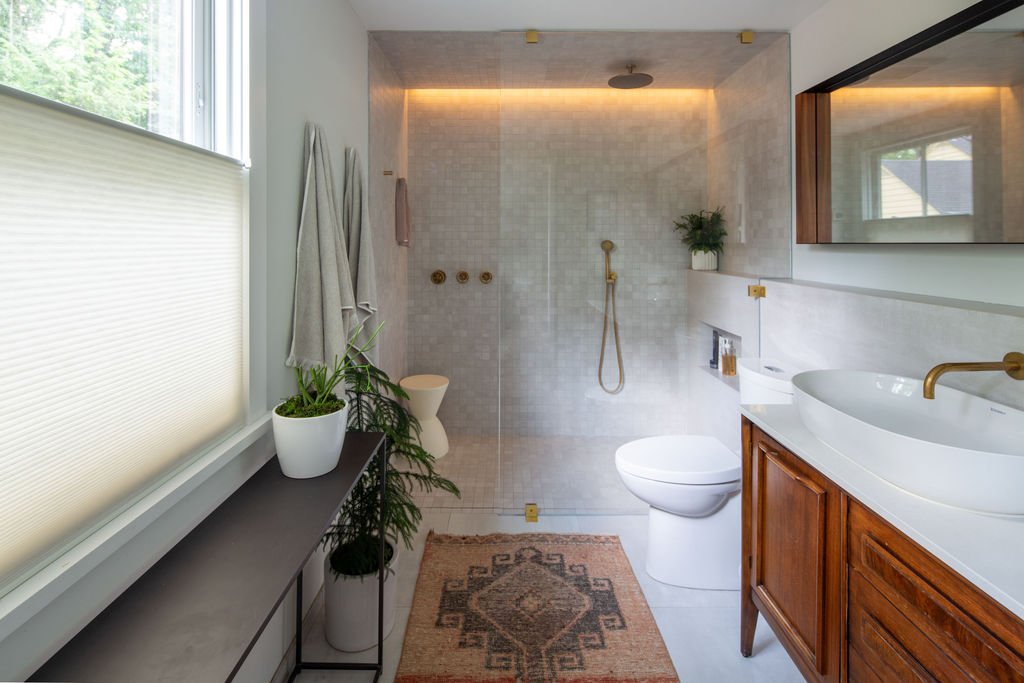
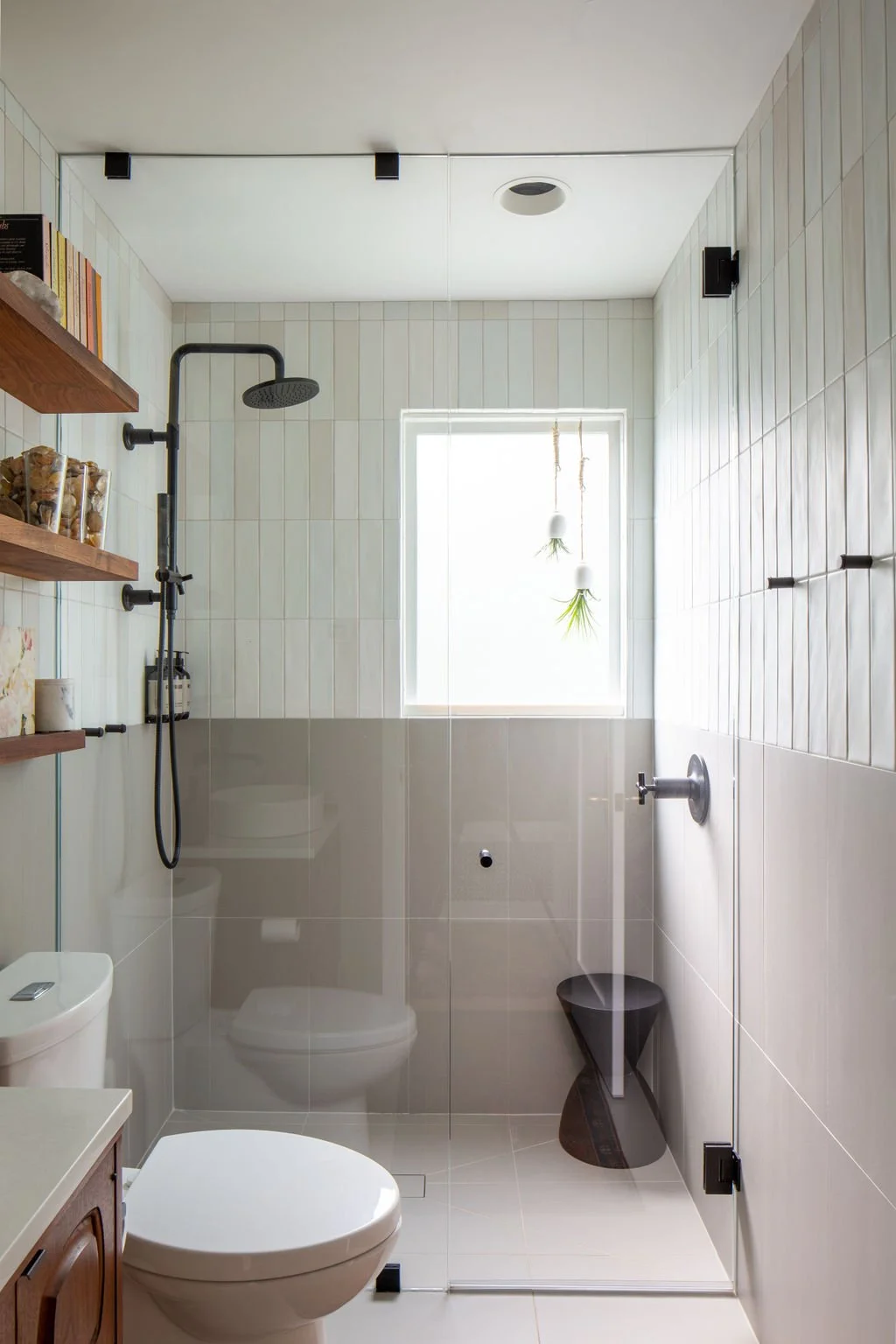
Bathrooms are reorganized to improve layout and usability. They are finished in restrained, spa-like tones with varied textures that catch and reflect light. This approach exists to create calm, functional spaces without visual excess. Vintage credenzas are adapted as vanities, introducing warmth and specificity. In use, these elements make the bathrooms feel personal and grounded rather than generic.
A Primary Bedroom Extended Into the Roof
The primary bedroom extends into the roof of the addition, creating a more varied sectional experience. This move exists to bring southern light into the space and to carve out a more intimate sleeping zone. A recessed sleeping nook sits within the roof form, with built-in bookcases integrated into the voids between trusses. In daily use, this creates a quieter, more sheltered place to rest while maintaining openness in the larger room.
Landscape as an Extension of Living
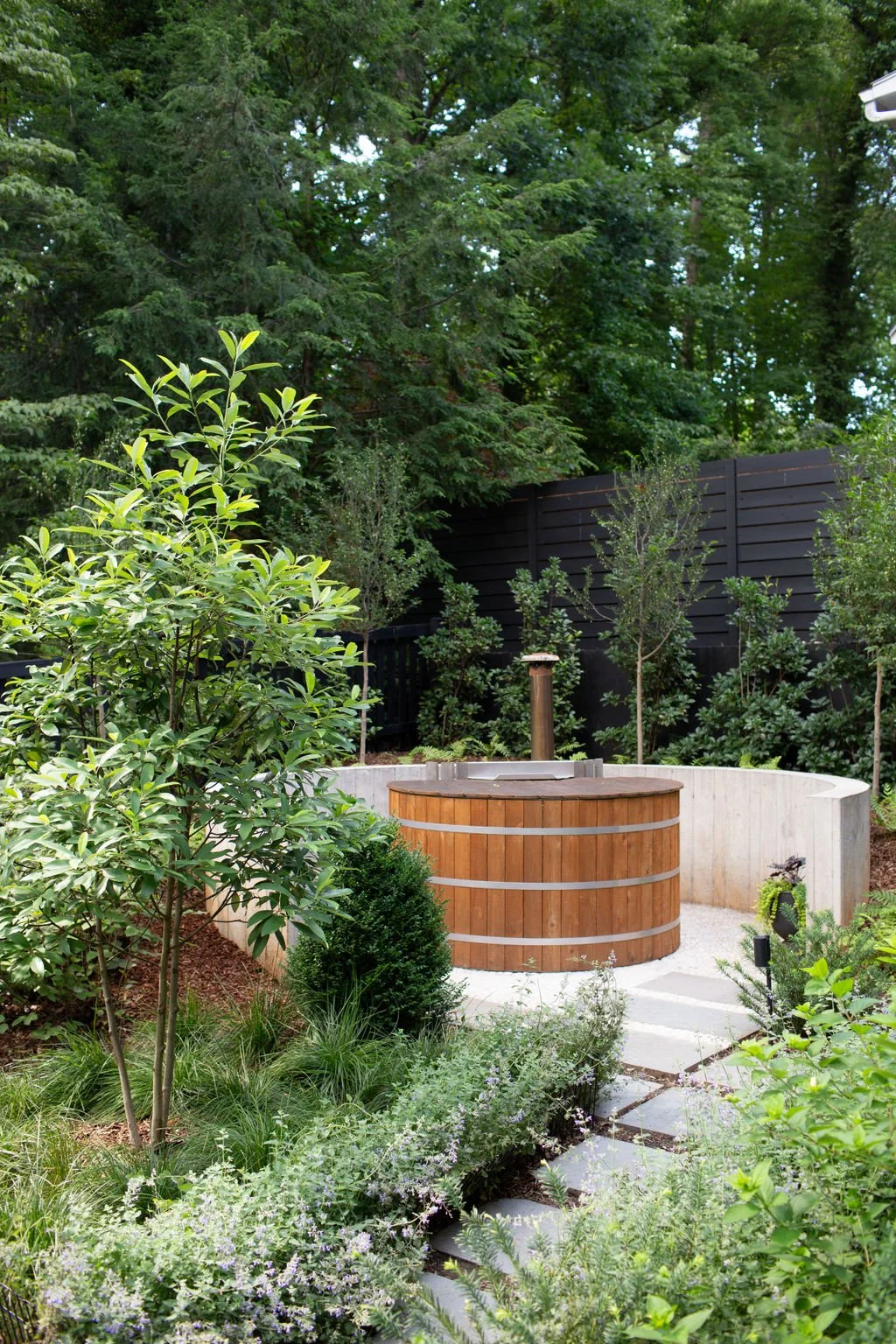
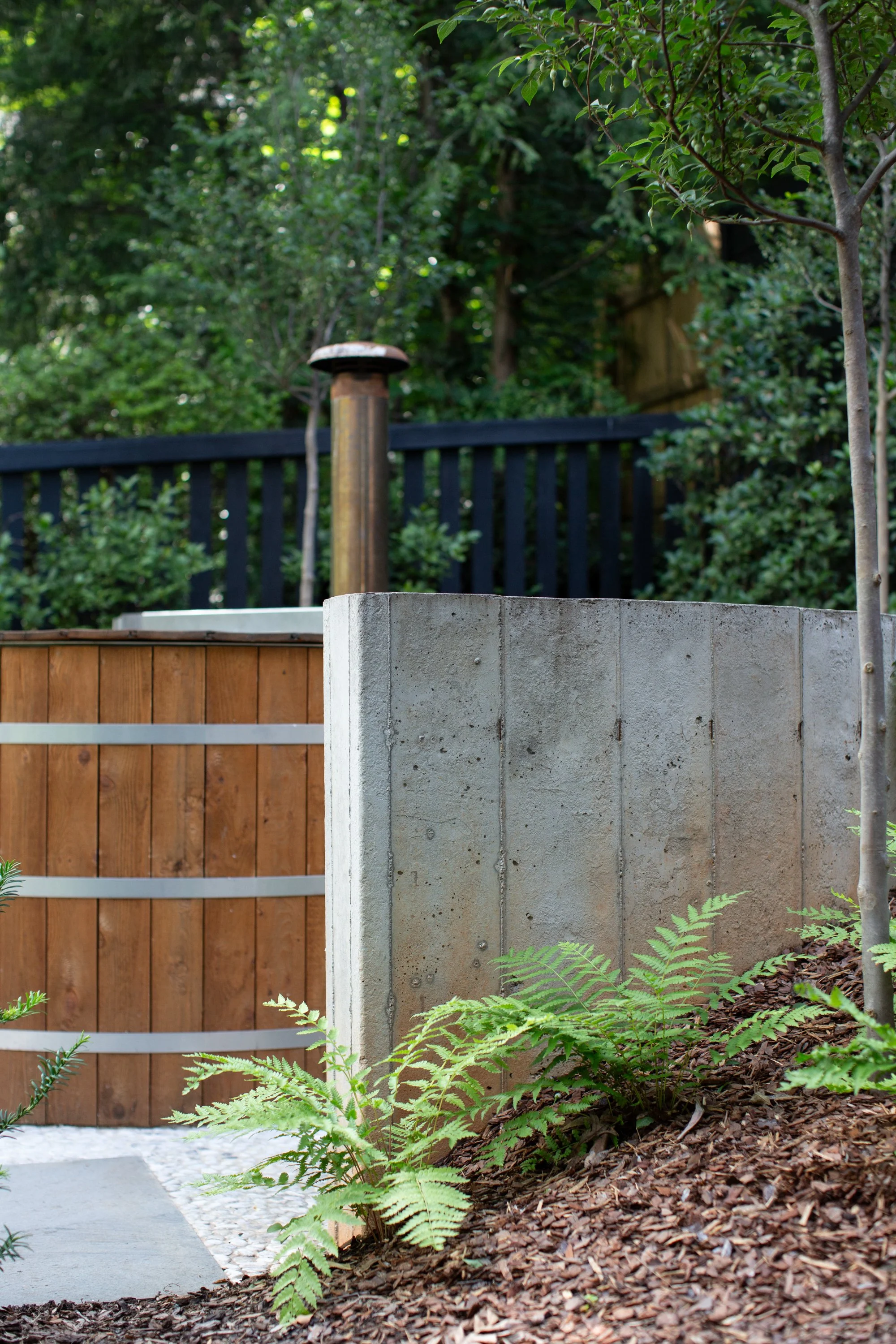
The landscape, designed in collaboration with Pray Design Associates, extends the architecture into the site. A series of bluestone terraces organizes outdoor living into distinct zones: cooking, dining, gardening, gathering, and retreat. These elements exist to support a range of outdoor activities without overlap. Movement between them is guided by corten steel elements that mirror the tones of the house and create continuity between built form and landscape. At the edge of the site, a grotto-like space is formed by a board-formed concrete arc set into the rising terrain. This element creates a defined terminus to the landscape while echoing the form of a nearby wood-burning hot tub. In use, it becomes a more enclosed, reflective space that contrasts with the openness of the terraces.
A House Defined by Connection
Herndon is defined by how it connects: to the street, to the backyard, and between its own spaces. The addition, sectional shifts, material transitions, and landscape work together to support a way of living that is social, active, and grounded in place. The result is a house that retains its scale and character while functioning with greater clarity, openness, and ease.