
Myrtle
A two-story addition and targeted renovation extend a historic Belmont farmhouse with clarity, light, and measured continuity.



Myrtle
Addition + Renovation
Historic Farmhouse Addition in Charlottesville’s Belmont Neighborhood
Located in the heart of Charlottesville’s Belmont neighborhood, Myrtle began as a turn-of-the-century farmhouse defined by simplicity, efficiency, and quiet charm. The house served its family well, but the arrival of a second child made the need for additional space clear. The project replaces a deteriorated lean-to kitchen with a new two-story addition designed to support modern family life while maintaining the architectural integrity of the original home. The work focuses on extending the house without diluting its character, allowing old and new to remain distinct but connected.
A Lowered Addition That Establishes Transition
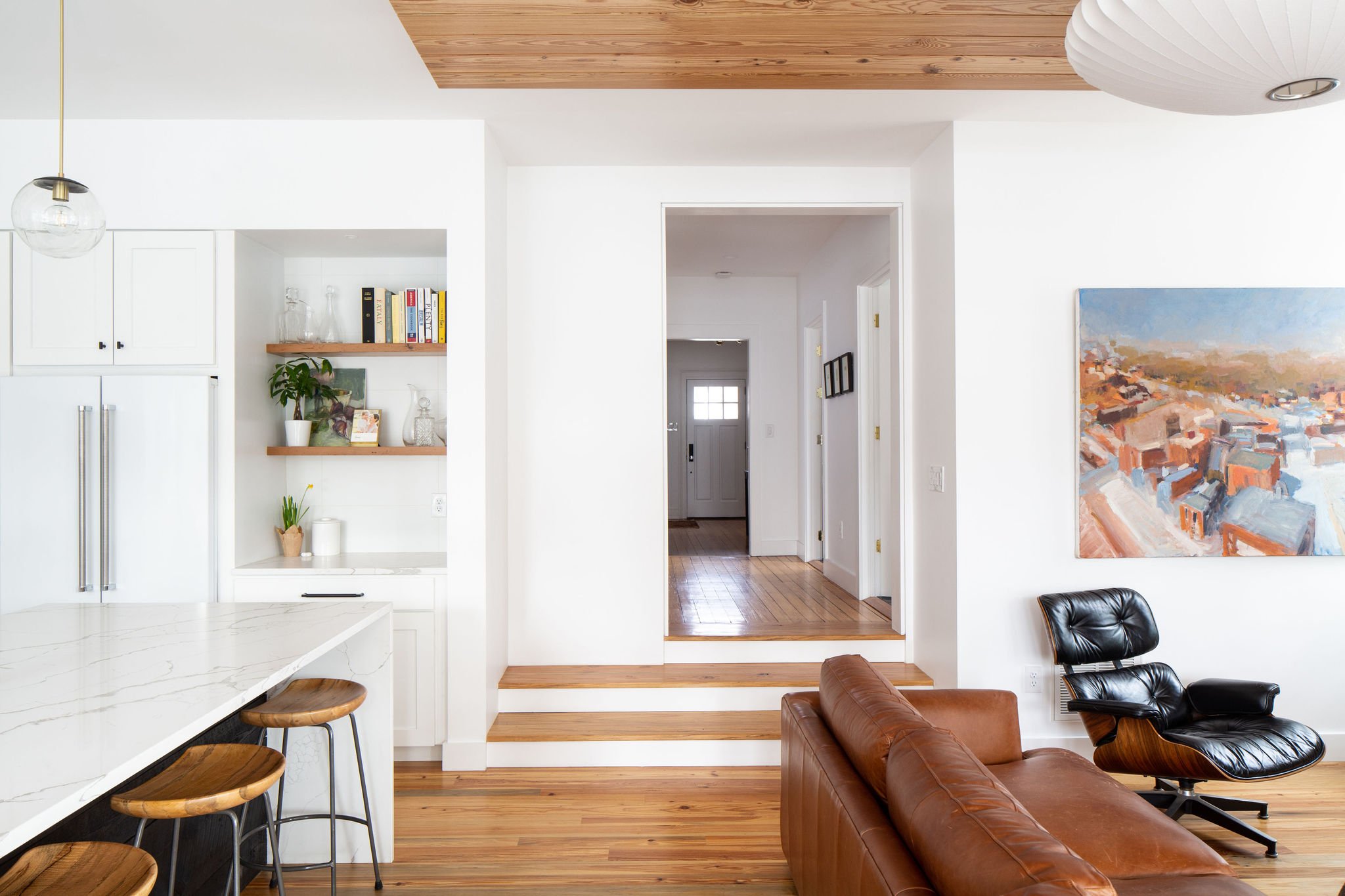
The new addition is set slightly below the main level, responding to the site’s gentle slope. This move exists to create a clear but subtle threshold between the original house and the new work. The transition is marked by a short run of reclaimed heart pine steps, salvaged from the home itself. This detail reinforces continuity while making the shift in level legible. In daily use, the change in elevation slows movement and gives a sense of arrival into the new living space.
A Light-Filled Kitchen and Living Volume
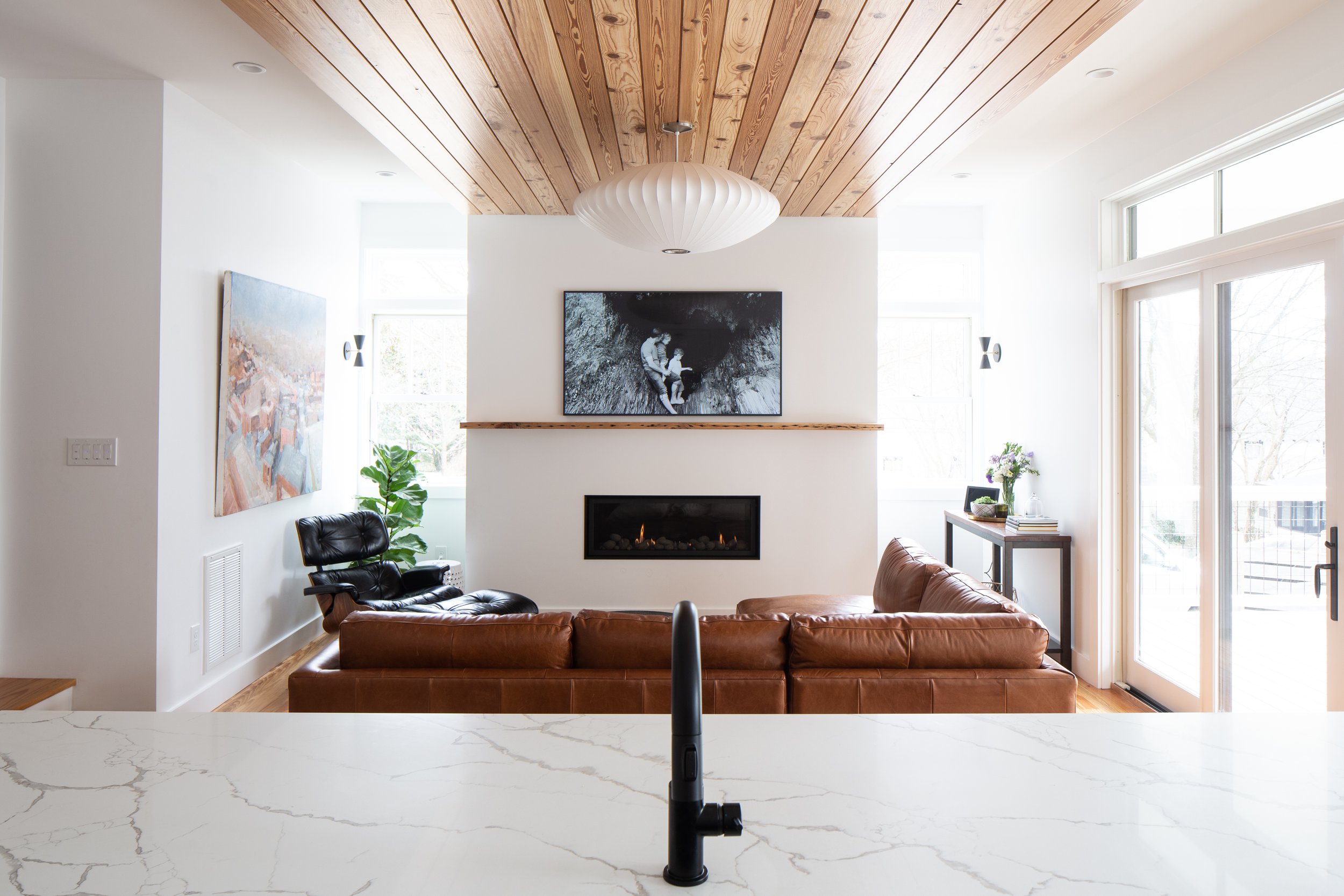
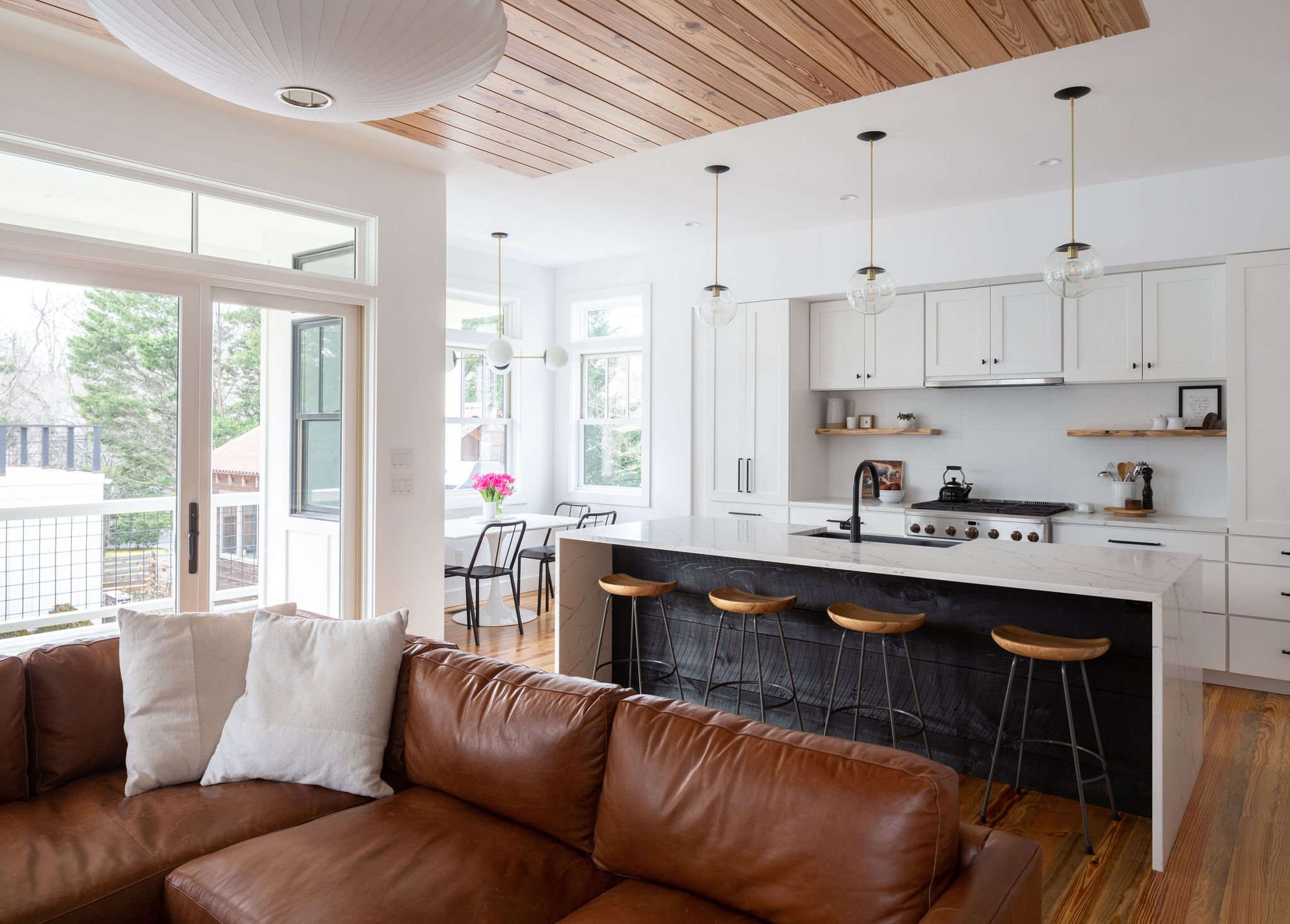
The main level of the addition houses the kitchen and primary living space, organized to take advantage of southern exposure. Oversized windows and sliding glass doors bring consistent daylight deep into the room and connect directly to the exterior. This element exists to replace a previously cramped and underperforming kitchen with a space that supports gathering, movement, and daily use. The increased height of the addition allows light to enter from multiple directions, making the room feel open without losing its sense of enclosure.
An Axial Layout That Organizes Use
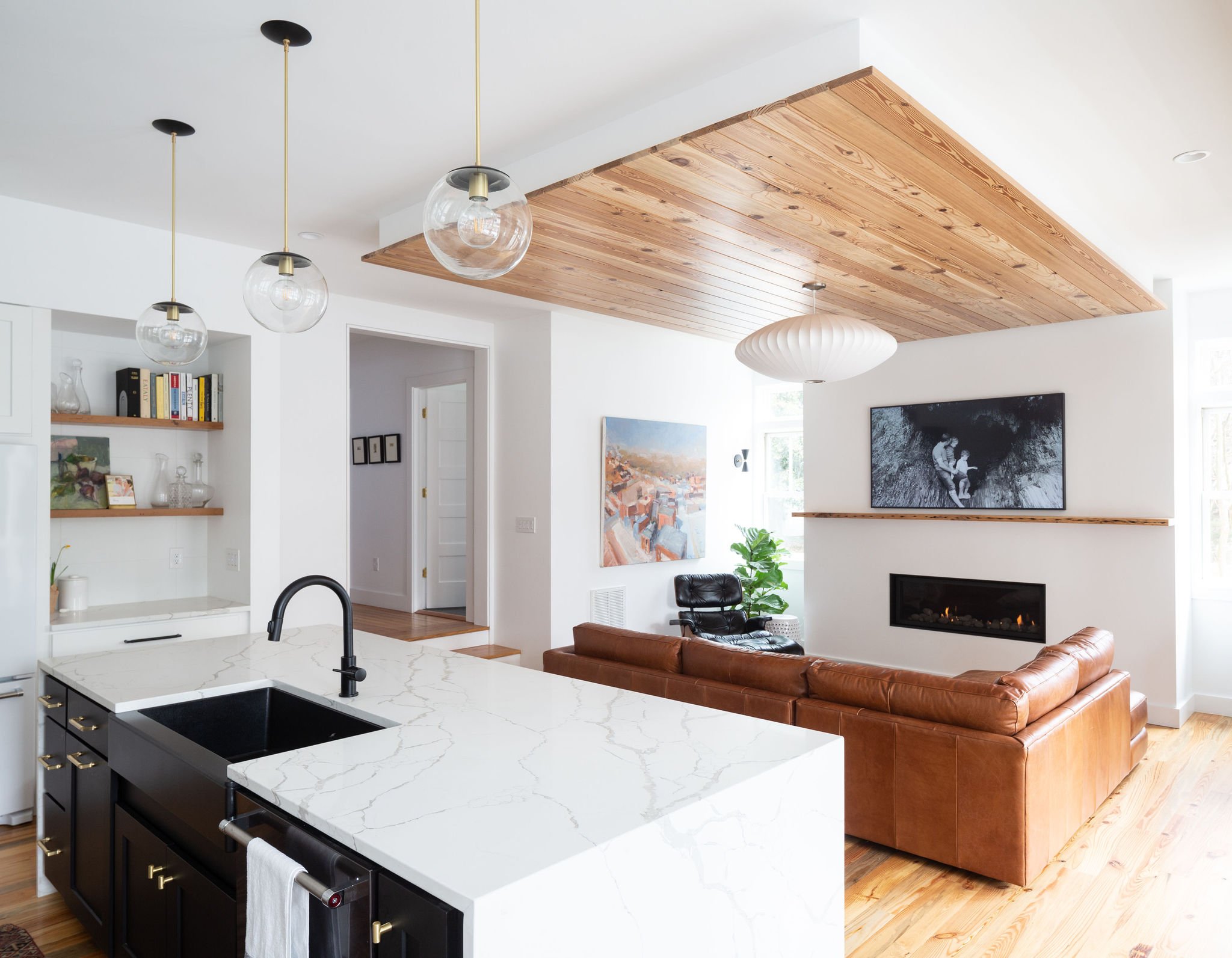
The plan is structured along a central axis that aligns the fireplace, island, and range. This move exists to give the open plan a clear internal order, preventing the space from feeling diffuse. In use, the alignment creates a legible sequence across the room. It anchors movement, supports cooking and gathering simultaneously, and allows each element to hold its place without competing for attention.
A Reclaimed Island as the Center of Daily Life
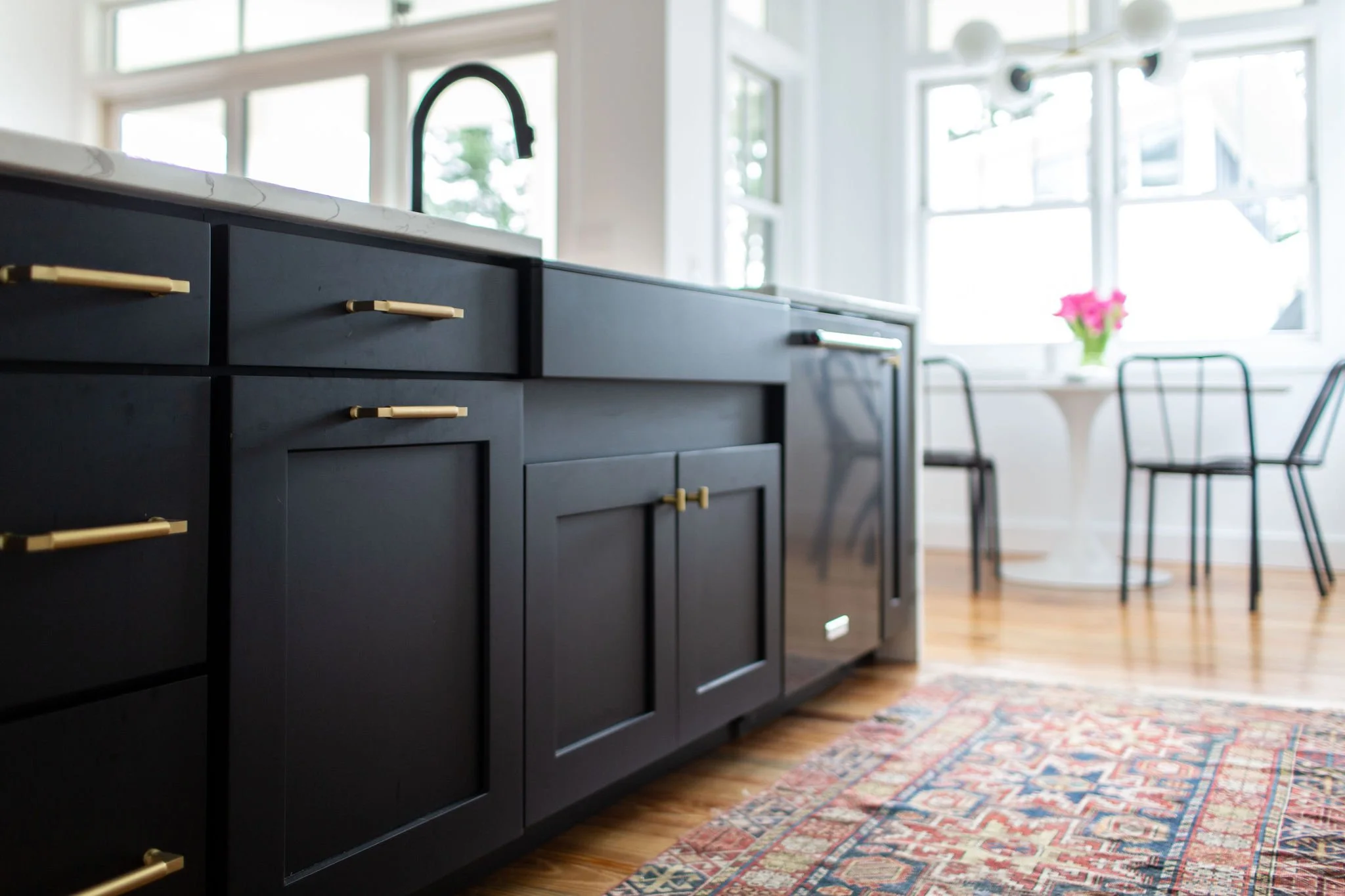
The kitchen island, wrapped in wide plank siding reclaimed from the original structure, acts as the functional center of the home. This element exists to define a boundary between cooking and gathering while keeping the experience shared. Referred to by the homeowners as “Command Central,” it supports meal preparation, casual seating, and daily routines such as homework and conversation. Its material expression ties it directly back to the original house, grounding the new work in the old.
A Lowered Ceiling Plane for Intimacy
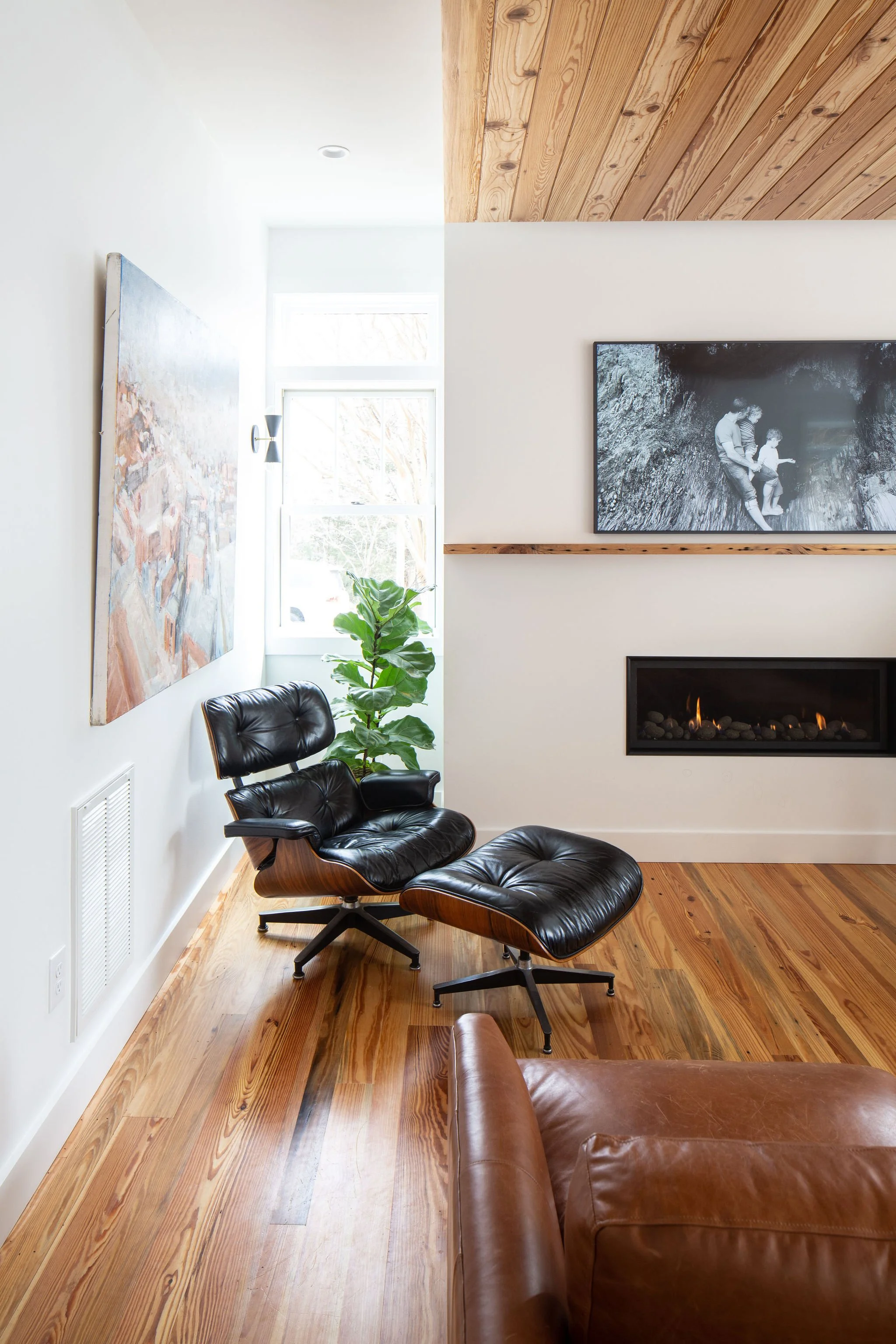
Above the living area, a suspended panel of reclaimed heart pine lowers the ceiling plane. This element exists to create a sense of compression within a larger volume, making the seating area feel more intimate. In daily use, it defines a zone for conversation and rest within the open plan, allowing the room to support both active and quieter moments without separation.
Material Continuity With Modern Interpretation
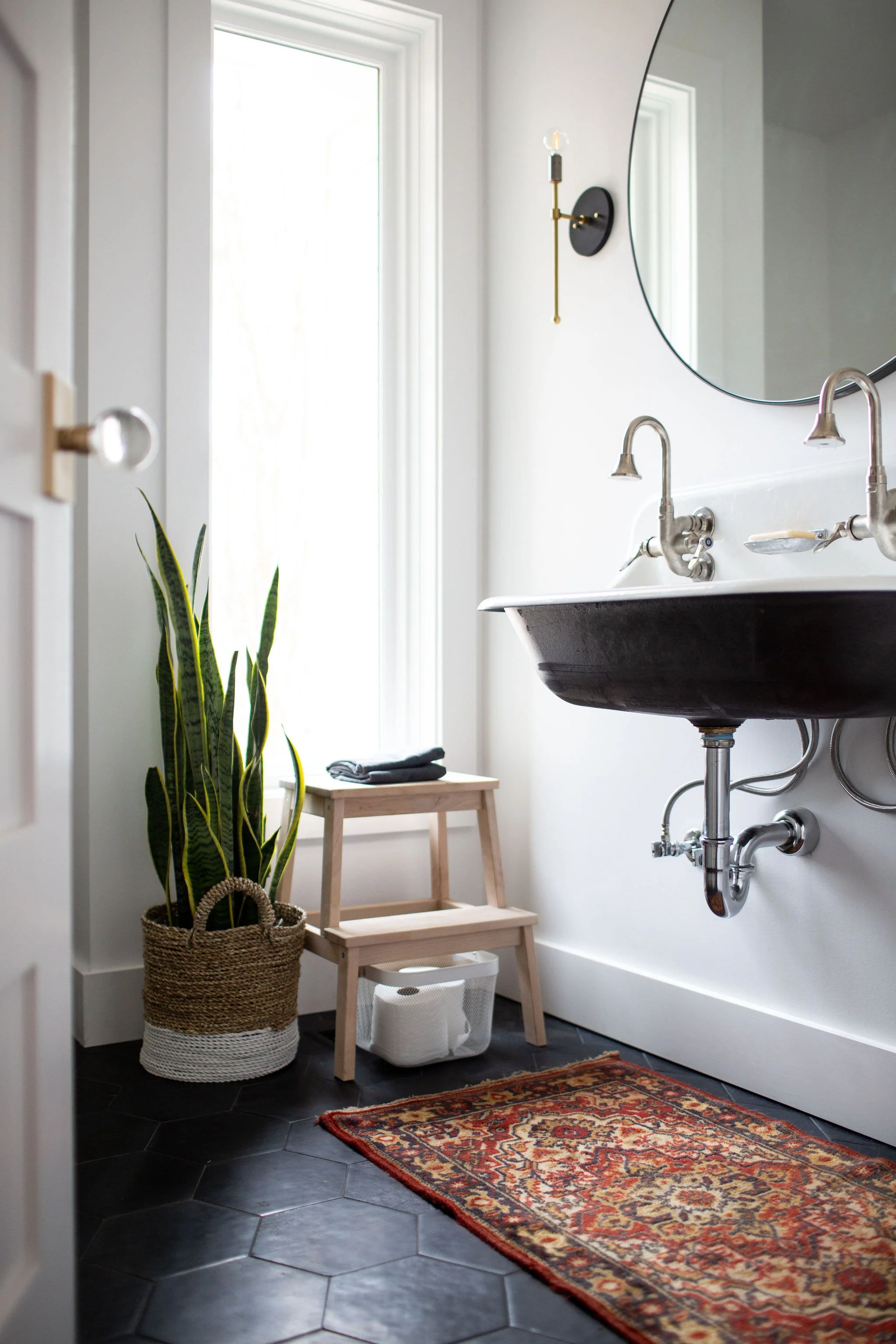
Throughout the addition, materials reinterpret traditional farmhouse elements. Reclaimed pine floors, a matte black apron-front island sink, a vintage cast iron utility sink, and a mix of crystal and brass hardware create a layered palette. These elements exist to maintain a connection to the home’s history while supporting current use. The materials are durable and tactile, allowing wear and use to register over time rather than be concealed.
A Primary Suite Oriented to View and Light
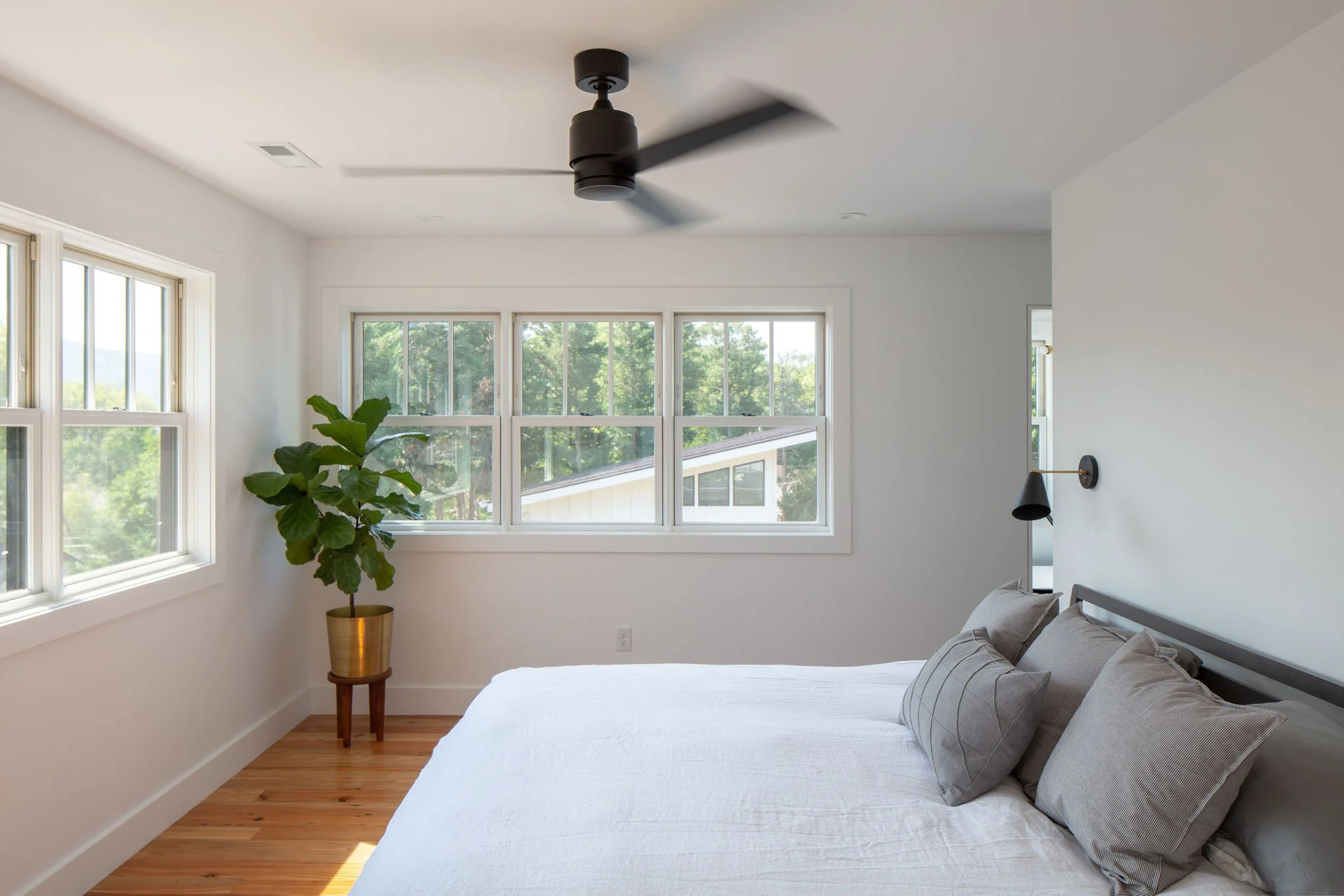
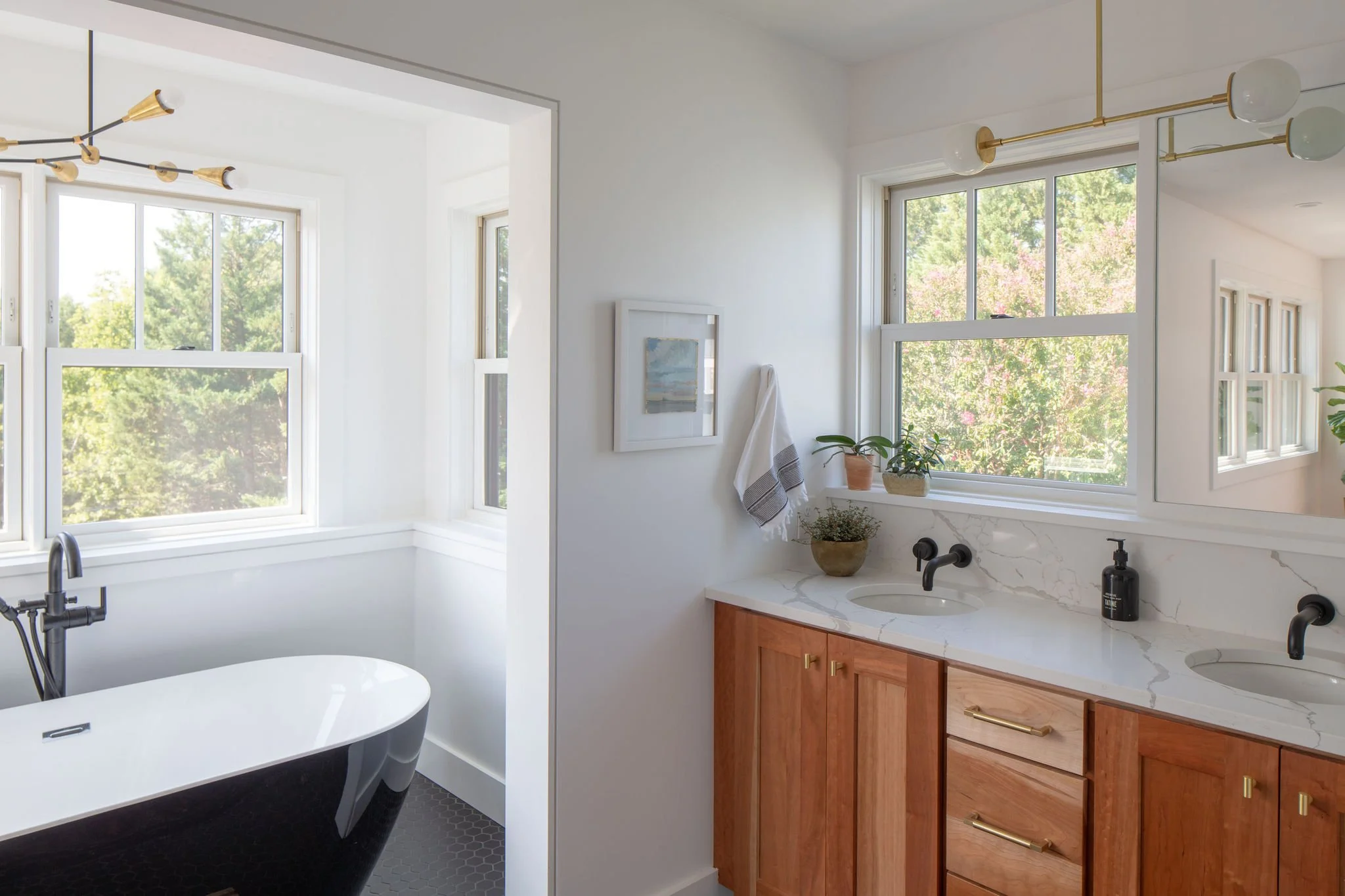
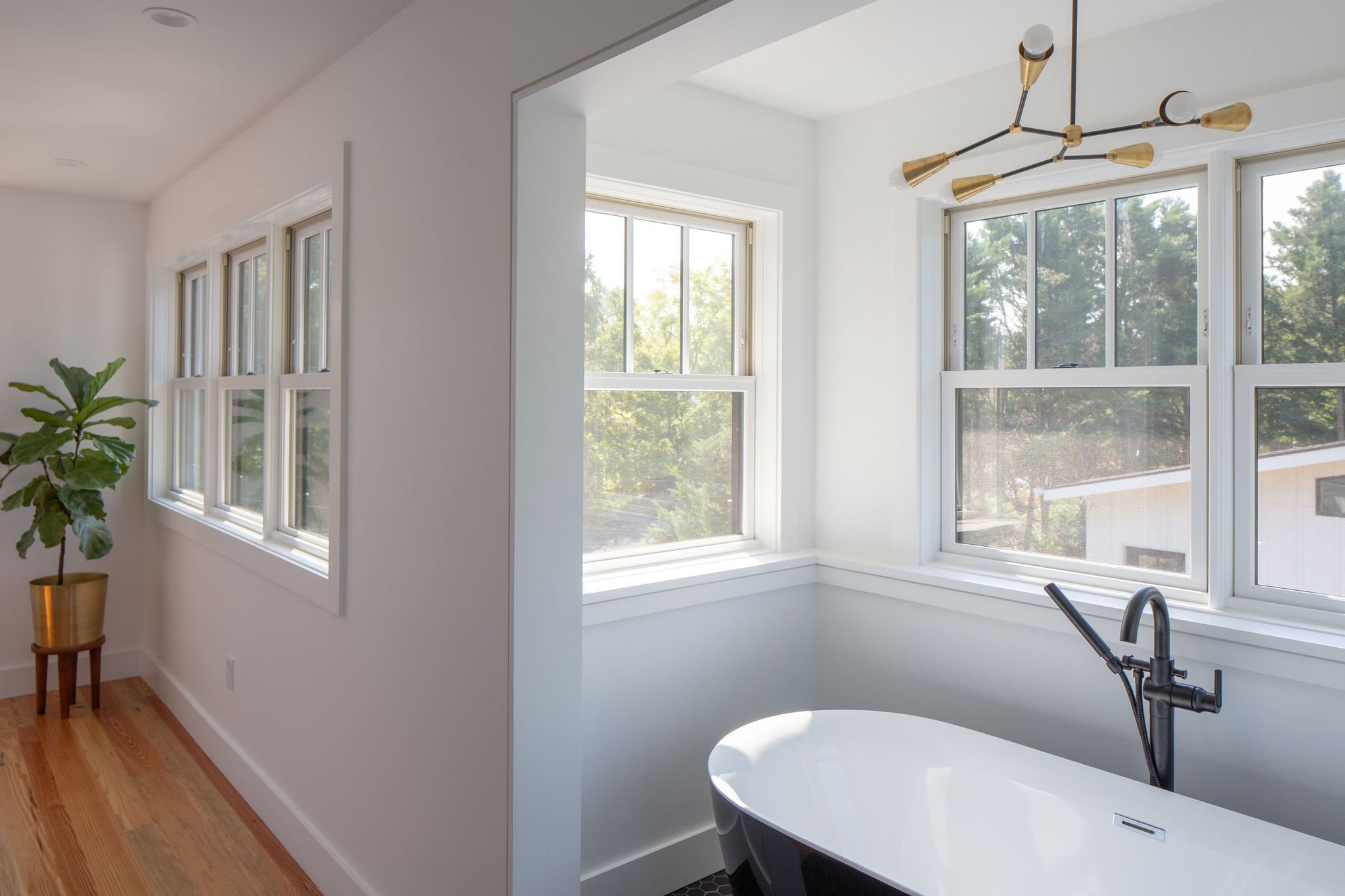
The upper level of the addition houses the primary suite, oriented toward views of Montalto. The bed wall aligns with the island below, reinforcing the axial organization established on the main floor. This alignment exists to carry spatial logic vertically through the house. It informs the placement of the adjacent bathroom and walk-in closet, creating a layout that feels ordered rather than arbitrary. A soaking tub is positioned within a sunlit nook, serving as both a place of retreat and a focal point. In daily use, it offers a quieter counterpoint to the more active spaces below.
A Measured Expansion of a Historic Home
Myrtle is defined by balance. The addition extends the house without overwhelming it, using level changes, material continuity, and clear organization to connect old and new. The result is a farmhouse that retains its original character while supporting a broader range of daily life. Spaces for cooking, gathering, rest, and routine are more generous, more connected, and more clearly defined.